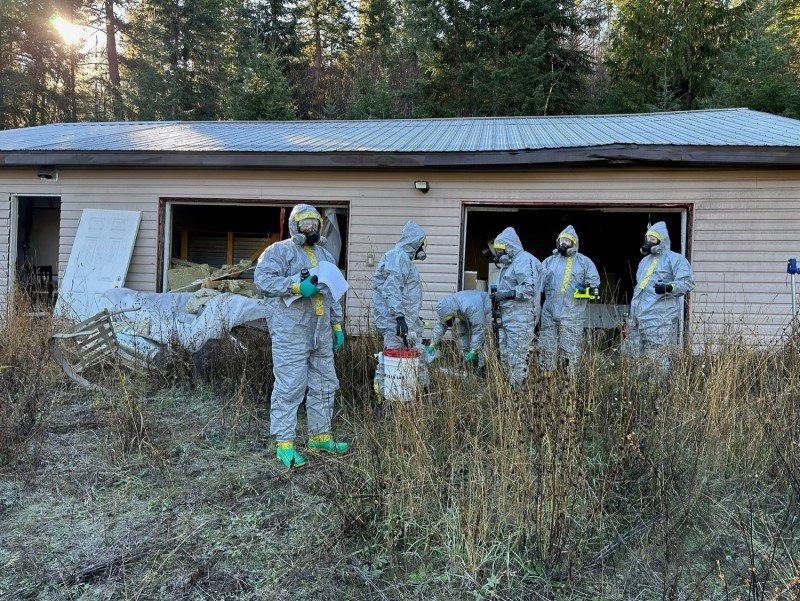

Gaganpreet Singh Randhawa pleaded guilty Wednesday to attempting to smuggle 310 kilos of meth to the Philippines. He admitted that he made several trips to a Richmond shipping company called Manila Cargo Express with boxes of meth destined for Southeast Asia in September and October 2024.
He agreed that he possessed a prohibited semi-automatic Glock and ammunition while he was under a lifetime firearms prohibition. There was no mention in the agreed statement of facts of the record-setting superlab in Falkland that was dismantled by the RCMP’s specialized team in October 2024. The RCMP’s federal and serious organized crime section targeted Randhawa in an investigation that began in April 2024.

On Randhawa’s arrest, cops searched locations that he was connected to — including Manila Cargo Express on No. 5 Road, a U-Haul locker he rented on 56th Avenue in Surrey, his stash house on 127A Street in Surrey and his apartment at 10603-148th St., as well as his Kia Sorrento. Randhawa admitted he possessed meth, fentanyl, carfentanil, cocaine and MDMA in his vehicle, as well as at the stash house.
Gaganpreet Singh Randhawa will be sentenced in January.
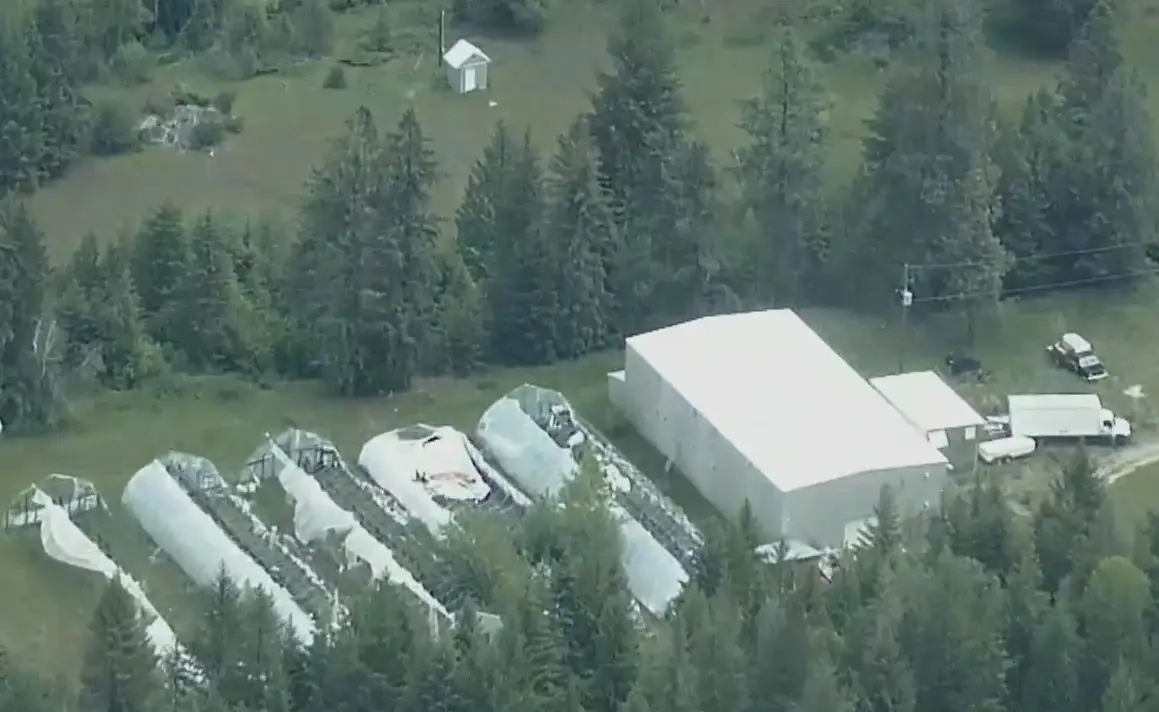 |
The superlab bust at 5011 Hoath Road in Falkland B.C. was 21 months ago. |
On October 25, 2024, RCMP Federal investigators raided a series of locations across Metro Vancouver, and executed search warrants on the massive drug superlab in Falkland. It was the largest illicit lab ever busted on Canadian soil. Haul was 390kg of meth, 54kg of fentanyl, 35kg of cocaine and 15kg of MDMA. The Falkland drug lab was connected to the September 2024 seizure of 30 tonnes of precursors from the Enderby property of Donnie Lyons. The Falkland lab was a major part of the Wedding/Lyons/Sandher/Sinaloa Cartel operation.

The setup was as sophisticated as any cops have ever seen. The lab mass produced fentanyl, meth and MDMA, most of which was destined for Australia and New Zealand. Cleaning up the lab cost taxpayers well over $1m. Several tons of unregulated chemicals used to produce P2P (phenyl-2-propanone) were seized. Seen for the first time in Western Canada, P2P is a Class A scheduled precursor essential to the manufacture of meth.

89 guns were seized in raids in Surrey October 25. Included were two .50 cal sniper rifles, 45 handguns, 21 AR-15-style rifles and submachine guns. Gaganpreet Singh Randhawa was the only man busted. He has made at least 7 court appearances and has been caged since he was busted in October 2024.
Cops sang loudly on October 25, 2024. “The combined fentanyl and precursors seized at this facility could have amounted to over 95,500,000 potentially lethal doses of fentanyl.” It’s been nothing but silence since then. Thanks to a publication ban, nobody can say if Gaganpreet Singh Randhawa is still in jail.
Chemicals seized in Enderby/Falkland;
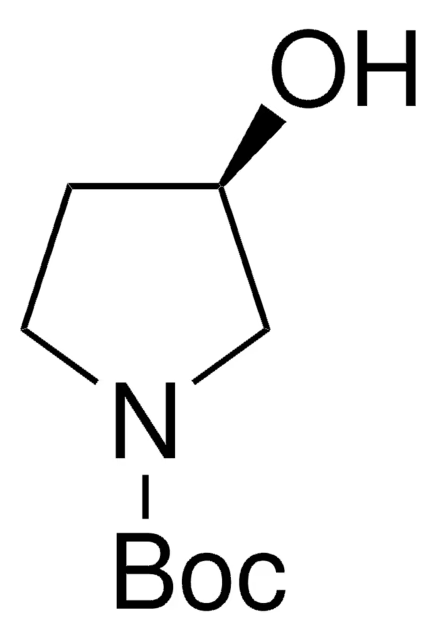 |
N-Boc-3-pyrrolidinone is a “building block” chemical. In legitimate chemistry, it’s used for pharmaceuticals; in a clandestine setting, it serves as a structural backbone. |
– The “Scaffold”: It provides a pyrrolidine ring—a five-membered structure found in many potent stimulants and opioids.
– Designer Drugs: It is a key intermediate in the synthesis of synthetic cannabinoids and various “designer” stimulants (like substituted pyrrolidines).
Protection: The “Boc” part is a protecting group. It allows chemists to “mask” a sensitive part of the molecule while they perform harsh reactions on another part, then “unmask” it later to finish the drug.
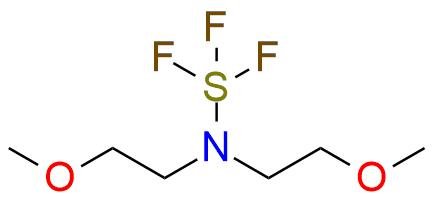 |
Deoxo-Fluor is a specialized and expensive fluorinating agent. |
Its presence at Falkland indicates a very high level of sophistication.
– Adding Fluorine: Deoxo-Fluor is used to replace oxygen atoms (like those in N-Boc-3-pyrrolidinone) with fluorine atoms.
– Potency and Stealth: Adding fluorine to a drug (like “fluorinated fentanyl” or “fluoromethamphetamine”) often makes the drug more potent, helps it cross the blood-brain barrier more easily, and can make it harder for standard drug tests to detect.
Safety (for the chemist): Unlike older reagents like DAST, Deoxo-Fluor is more thermally stable. This makes it a preferred choice for large-scale “super labs” where an accidental explosion would destroy millions of dollars in equipment and product.

Why these two together?
When found in the same lab, these chemicals are likely being used in a multi-step process to create fluorinated pyrrolidines.
1. The N-Boc-3-pyrrolidinone provides the core shape.
2. The Deoxo-Fluor modifies that shape by adding fluorine to a specific position.
3. The result is a highly potent, potentially “new” or unregulated version of a known illicit drug.
Fluorination is a powerful tool in legitimate medicine, but in the hands of clandestine “super lab” chemists, it is used to create drugs that are significantly more lethal and addictive than their non-fluorinated counterparts.
The presence of Deoxo-Fluor in Enderby confirms that the chemists were actively modifying molecules to achieve these dangerous effects.
1. Increased “Lipophilicity” (The Grease Factor)
The blood-brain barrier (BBB) is a protective “filter” that keeps toxins out of the brain. To cross it, a molecule usually needs to be lipophilic (fat-soluble).
– The Effect: Fluorine is highly electronegative and “greasy” in a way that helps the drug slip through the fatty membranes of the BBB much faster.
– The Danger: A fluorinated drug (like para-fluorofentanyl) hits the brain almost instantly and with higher concentration. For a user, this means the window between “feeling the high” and “respiratory failure” is much smaller.
2. “Metabolic Blocking” (The Shield)
Your liver works to break down drugs into harmless waste. It usually does this by attacking “soft spots” on the molecule (Carbon-Hydrogen bonds).
– The Effect: The bond between Carbon and Fluorine (C-F) is the strongest bond in organic chemistry. By replacing a hydrogen atom with a fluorine atom, the chemist “plugs” the hole where the liver would normally attack.
– The Danger: The drug stays in the user’s system much longer. This leads to stacking—where a user takes a second dose because they think the first has worn off, only for the two doses to combine and cause a fatal overdose.
3. Higher Binding Affinity (The Tight Grip)
Fluorine can change the shape and electronic charge of a drug molecule so that it fits more tightly into the brain’s receptors (like the μ-opioid receptors).
– The Effect: Think of a key in a lock. A fluorinated drug is like a key that has been polished and magnetized to snap into the lock and stay there.
– The Danger: It takes a much smaller amount of the drug to produce a massive effect. This is why “designer” versions can be 10x to 100x more potent than the original, making “hot spots” in a batch even more deadly.
4. Detection Evasion
Traditional drug tests (like those used by police or hospitals) are designed to “look” for specific molecular shapes.
– The Effect: Adding a fluorine atom slightly changes the “shape” of the molecule.
– The Danger: A person might overdose on a fluorinated analogue, but a standard hospital screen might come back negative for fentanyl or meth. This delays life-saving treatment because doctors don’t know exactly what they are fighting.
|
The B.C. director of civil forfeiture filed a claim against the property at 5011 Hoath Road and various pieces of lab equipment on January 31, 2025. |
Named in the claim are property owner Michael Driehuyzen and Gaganpreet Singh Randhawa. Michael Driehuyzen bought the 163-acre lab property in Falkland in May 2007 for $655k. It was used for an illegal grow op for years. He now lives on a chicken farm on Downes Road in Abbotsford owned by a Kamloops poultry company. Driehuyzen claims full ignorance. The Sandhers leased the ground from Driehuyzen. Sandher lawyer Bert Tonsoo drafted the lease agreement.

The Falkland lab was visited by Sinaloa boss Edgar Watson, and KTF brass including Bir Singh Sandher, Gurjit Singh Jhajj and former KTF boss Arsh Dalla before commissioning. Gurtaj Singh Sandher was at the lab. Sami El-Helou handled payment and supply of precursors. Those came through the HAMC and Ricco the Pig Puncher at DeltaPort.

RCMP raided a property in Enderby in September 2024 and seized over 30,000 kg of precursor chemicals.
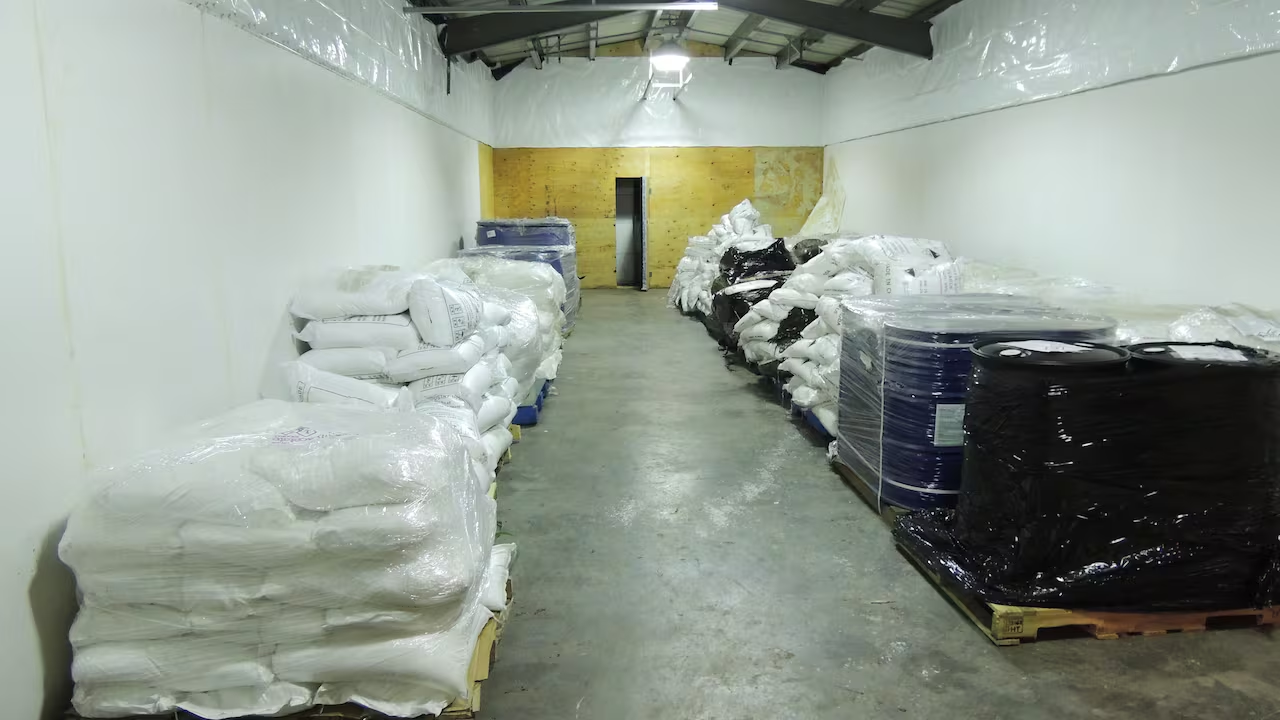
The 2.6-hectare property was purchased in May 2023 by 2735152 Ontario for $1m. It’s Ottawa address is a Mexican restaurant. Workers there claim ignorance of the company or purported owner Osman Ghazie.
 |
The Sandhers were in partnership in the synthetic drug business with Donnie Lyons who they executed on June 15, 2024. |


Prabtaj Singh Sandher and Gurtaj Singh Sandher were the hitmen in the Lyons murder. The hit was ordered by Edgar Watson with Sami El-Helou. Final approval came from Chapito Ivan Archivaldo Guzman.
 |
 |


Sam Cooper penned a damning report. Here. Ottawa’s repeated inability to investigate and prosecute major drug trafficking and money laundering networks in Canada is said to stem from a combination of weak, outdated laws and ineffective RCMP leadership. Americans are incensed.
Mounties refused to investigate or cooperate with the DEA on a B.C. fentanyl superlab probe tied to Chinese chemical-precursor shipments into Vancouver in late 2022, according to senior U.S. officials. More than a year later, and only after the U.S. Treasury sanctioned Bahman Djebelibak, did the RCMP finally open a siloed investigation. RCMP then continued to refuse coordination or information sharing with U.S. agents. Derek Maltz, DEA Acting Administrator in 2025, called the B.C. superlab case a “major disaster.” “The way they conducted business was disgusting, honestly,” Maltz said.

What Ottawa failed to share is that the DEA’s Newark, New Jersey office had delivered the case to Canadian cops almost two years earlier with a warning of precursor shipments tied to Bahman Djebelibak and his company, Valerian Labs. Djebelibak ‘Bobby Shah’ and his deceased wife, Ramina Shah, were caught up in 2018 cop raids of Valerian Labs and the couple’s mansion, which led to a failed B.C. civil forfeiture action after cops violated their rights. Cops seized a Land Rover, a Porsche and a 2006 Pontiac G6 at the couple’s $3m mansion.

The Djebelibaks claimed they earned $20k a year. A hidden compartment in the car contained 2kg of fentanyl, a 1kg of cocaine, and cutting agents. In January 2022, realtor Ramina Shah was stabbed to death in a parkade in Coquitlam.

Djebelibak was a major player in Chinese fentanyl syndicate networks. “Valerian Labs Inc. has received shipments of methylamine hydrochloride, which is a precursor chemical used to produce methamphetamine and MDMA. Valerian Labs Distribution Corp. has tried to procure 2,000 litres of chloroform, 800 litres of dichloromethane and 200 kilograms of iodine, substances used in the production of fentanyl, heroin, and methamphetamine.” He is accountable for “the international proliferation of illicit drugs or their means of production.”
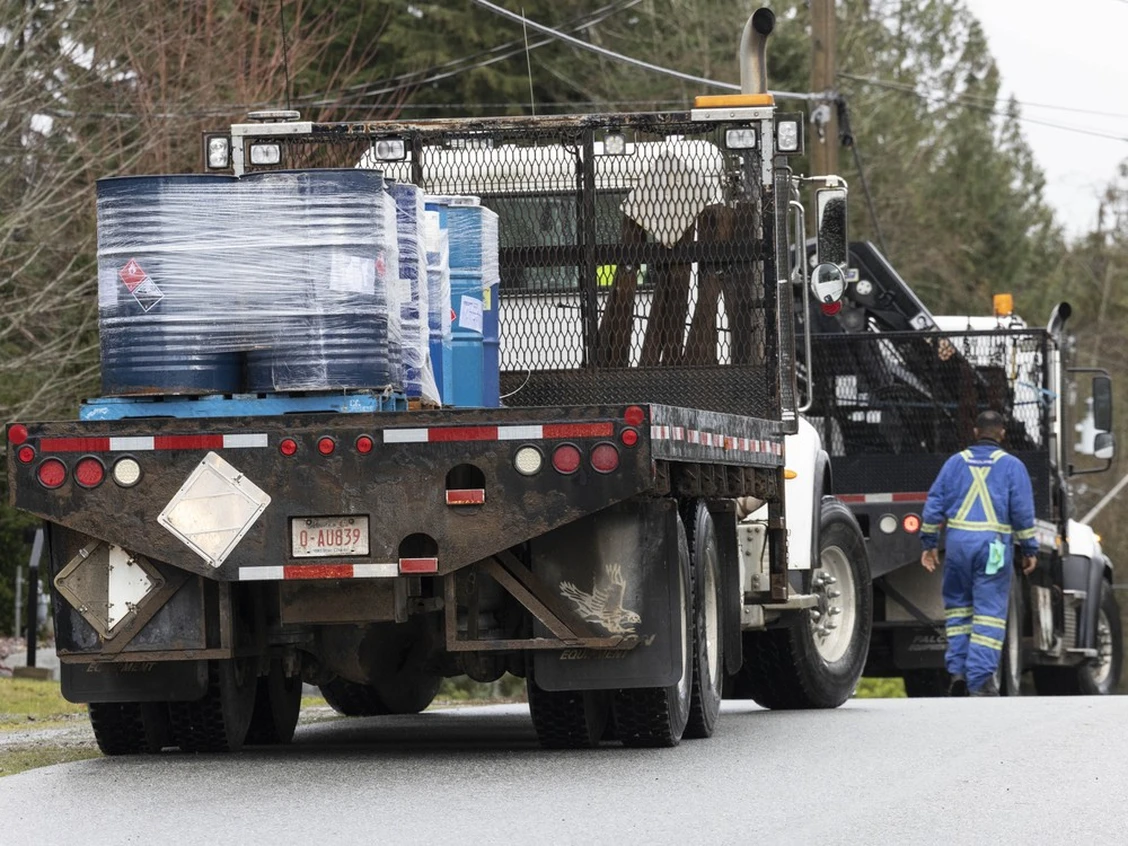
This failure of the RCMP is the reason Trump imposed tariffs. The White House said: “Mexican cartels are increasingly operating fentanyl labs in Canada.” It added: “Canada-based drug trafficking organizations maintain robust ‘super labs,’ mostly in rural and dense areas in western Canada, some of which can produce 44 to 66 pounds of fentanyl weekly.”
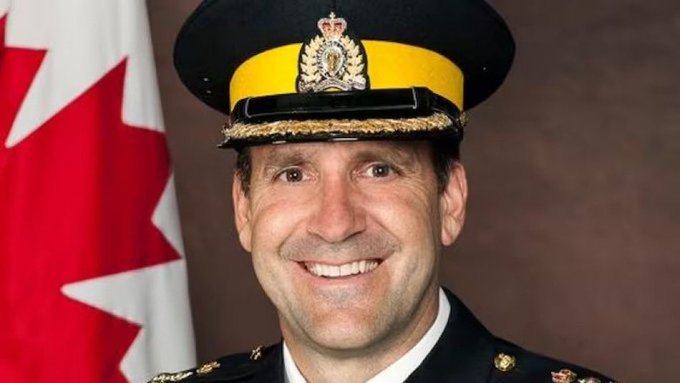
Ottawa’s newly appointed “fentanyl czar” told U.S. officials in Ottawa he has no authority to influence Canadian federal police or border agencies. The Trudeau government named Kevin Brosseau as Canada’s first fentanyl czar in February. Starting salary is between $243,500 and $286,400.
 |
He said, ‘Listen, I don’t tell the RCMP what to do. I listen to what RCMP, CBSA, and other police services have to say, but I have no authority to direct them or ask them to do anything,’”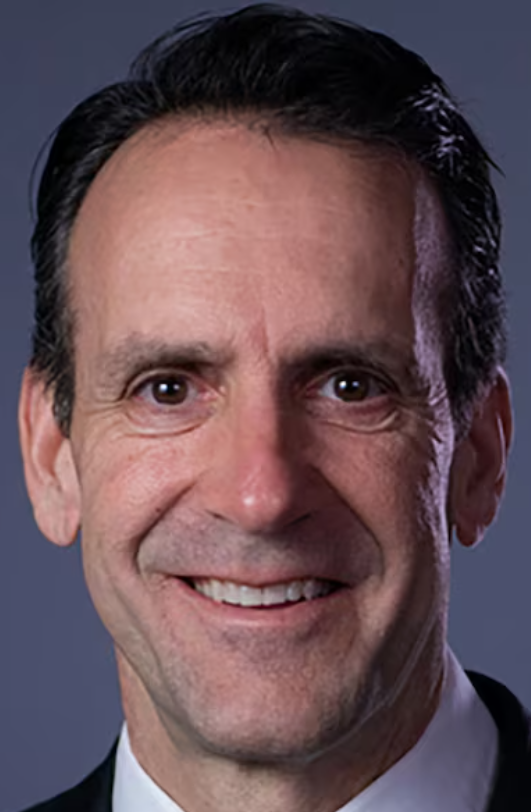 kevin.brosseau@pco-bcp.gc.ca |
“There’s been nothing that’s come out of that office since they established it,” the source added. “No strategic plan. I don’t even know if he’s relevant …”
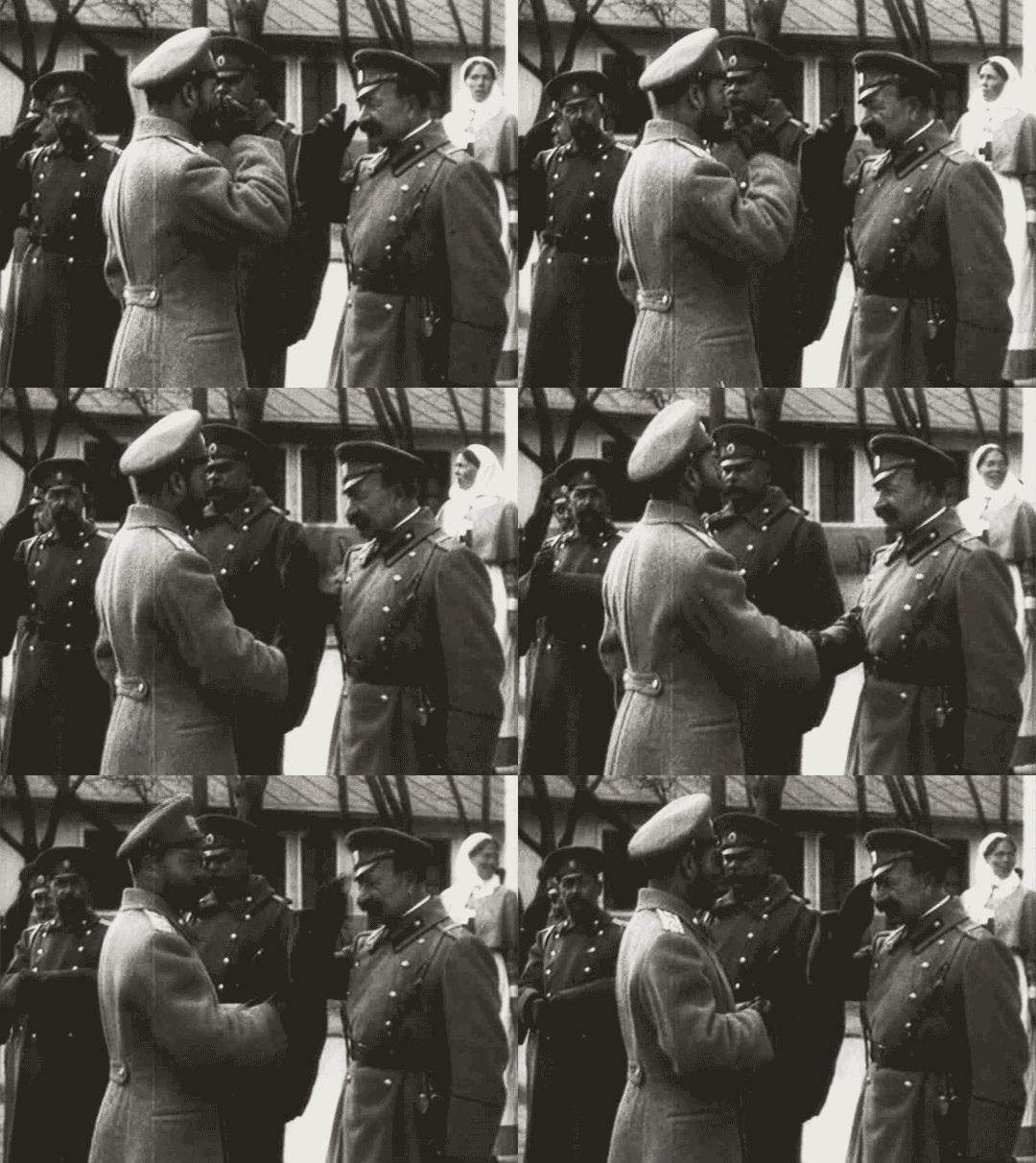

The BC Prosecution Service says Assistant Commissioner David Teboul, who is the RCMP’s Pacific Region commander, is accused of assault and assault by choking against one person, and a single count of assault against a second person. Teboul was the man at the microphone speaking of how ‘sophisticated’ the Sandher/Sinaloa Cartel drug operation in Falkland was.
Pollution
The presence of 23% Hydrofluoric Acid (HF) at the Sandher property on Old Vernon Road is a major “Double-Bind” for the family. While there is a thin “industrial” explanation for its presence, the concentration and volume described are highly irregular for a standard fruit-packing operation and point toward much darker uses.
1. The “Industrial Cleaning” Cover
In the fruit industry, HF is occasionally used in extremely diluted forms to clean specialized equipment.
– The Application: It is used as a powerful “aluminum brightener” to remove deep oxidation from the heavy-duty cooling coils in the refrigeration units or the high-volume apple flumes.
– The “Poor Quality” Link: If a facility has failed to maintain its equipment to the point where they need 23% concentration HF (which is industrial grade and incredibly dangerous), it suggests their “Clean-in-Place” (CIP) systems are severely compromised, leading to the “soapy” or “chemical” taste residents have complained about.
2. The Forensic Red Flag: Clandestine Chemistry
23% HF at a drug-trafficking safe house as a primary indicator of clandestine laboratory activity.
– Chemical Synthesis: HF is a precursor or reagent used in the synthesis of various high-value chemicals and illicit substances. It is particularly valued for its ability to “etch” or dissolve specific materials that other acids cannot touch.
– Precursor Processing: In the context of the Ryan Wedding organization, HF is often used in the final stages of purifying large quantities of narcotics or for the disposal of “evidence.” Because HF dissolves bone and organic tissue without leaving the same trace as other acids, it is often called the “Gangster’s Eraser.”
3. Safety and Environmental Danger
The storage of 23% HF explains why the local residents of Ellison have reported “pungent, chemical odors” that differ from typical sewage.
– The Burn Risk: At 23%, HF is a contact poison. If it touches a person’s skin (like a worker at the packing house), it doesn’t just burn; it penetrates to the bone and leaches calcium from the body, causing cardiac arrest.
– The Water Supply: With the Sandhers dumping 23% HF into the ditches along Old Vernon Road (as alleged by the RDCO in March 2024), they are not just polluting; they are creating a long-term toxic hazard for the local aquifers.
3. The “Agri-Business” Cover vs. Reality
The Sandher family may attempt to claim Pyrrolidine is a “flavoring agent” or “pesticide intermediate,” but this is highly unlikely to hold up under federal scrutiny:
– Flavoring: While tiny amounts of pyrrolidine derivatives are used in the food industry as “aroma chemicals,” they are never stored in the pure, high-volume industrial drums typical of the Sandher facility.
– The Smell Factor: Pyrrolidine has a distinct, foul, “dead fish” or ammoniacal odor. If this is present near a fruit-packing line, it would contaminate the fruit’s scent profile. Its presence in a separate “hangar” or “industrial storage” area is a classic indicator that it is being kept away from the “clean” side of the business for illicit processing.
The discovery of Thionyl Chloride at the Sandher property, alongside Pyrrolidine and 23% Hydrofluoric Acid, represents the final “Key” to a specialized clandestine laboratory profile. In federal forensics, this specific trio of chemicals is known as the “Designer Drug Signature.”
Thionyl Chloride is a highly reactive, volatile, and toxic chlorinating agent that has zero logical presence in a fruit-packing or orchard environment. Its presence is an unequivocal signal of high-level illicit chemical synthesis.
1. The “Precursor to Product” Bridge
Thionyl Chloride is the “enabler” used to chemically transform other substances into active narcotics.
– Synthesis of Pyrrolidine-based Stimulants: When combined with Pyrrolidine, Thionyl Chloride is used to create α-PVP (Flakka) and its derivatives. It acts as the reagent that converts carboxylic acids into acid chlorides, a critical step in producing these powerful synthetic stimulants.
– Fentanyl and Analogue Production: Thionyl Chloride is a primary reagent for synthesizing Propionyl Chloride, which the DEA has identified as a mandatory “List I” precursor for Fentanyl and its analogues.
– Methamphetamine Alternative: It is also used in a specific two-step synthesis of methamphetamine, where it reacts with ephedrine to form an intermediate before being reduced to the final drug.
2. Why it is the “Perfect” Criminal Reagent
Illicit “cooks” prefer Thionyl Chloride because it simplifies the “Superlab” operation:
– Gaseous Byproducts: Unlike other reagents that leave liquid or solid waste that must be hidden, the byproducts of Thionyl Chloride are gases (Sulfur Dioxide and Hydrogen Chloride). These can be vented through industrial fans or “scrubbed”, making the lab much harder for the public to detect by smell alone.
– Speed and Purity: It drives chemical reactions to completion very quickly at room temperature, allowing for the rapid production of high-purity drugs in a “high-traffic” industrial area like Old Vernon Road.
3. The Extreme Danger: The “Invisible Burn”
Thionyl Chloride is a Schedule 3 chemical under the Chemical Weapons Convention because it can also be used to produce nerve agents like Sarin.
– Water Reactivity: It reacts violently with water (including humidity in the air), releasing clouds of acidic gas. If the Sandhers are storing this in a damp agricultural environment or near “fruit washing” flumes, a single leak could cause a mass-casualty event for the workers.
Corrosivity: It is so corrosive that it must be stored in specialized glass or steel containers. Seeing these containers in a standard “fruit hangar” is a major safety violation.
(2S)-2-amino-3-[4-(4-hydroxy-3-fluorophenoxy)-3,5-difluorophenyl]propanoic acid, is a trifluorinated analogue of the thyroid hormone T3 (Triiodothyronine).
In forensic science and specialized medicine, this is not a standard agricultural chemical. It is a highly specialized “unnatural amino acid” used for two specific purposes: advanced metabolic manipulation or clandestine drug performance enhancement.
1. The “Invisible” Performance Enhancer
This compound is a fluorinated thyromimetic. By replacing the iodine atoms in natural T3 with fluorine, the molecule becomes much more stable and resistant to the body’s natural breakdown processes.
– Hyper-Metabolism: Like T3, it forces the body to burn fat and increase energy expenditure at an extreme rate. Because it is fluorinated, it is much harder for standard anti-doping or medical tests to detect.
– The “Physique” Drug: In high-end criminal circles or elite bodybuilding, these analogues are used to maintain a shredded, low-body-fat physique even while consuming a high-calorie “party” lifestyle.
2. High-Tech Drug Solubilization
The presence of this chemical alongside Pyrrolidine and Thionyl Chloride suggests a very sophisticated clandestine operation.
– Carrier Molecules: Fluorinated amino acids are often used in “Peptide-Drug Conjugates.” They can be attached to synthetic drugs (like the ones made with Pyrrolidine) to help the drug cross the blood-brain barrier more efficiently, making the final “product” significantly more potent and addictive.
– The “Smart” Drug: This is “Designer Drug 2.0.” It suggests the Sandher facility isn’t just a “cook house,” but a R&D lab for high-purity synthetic stimulants that are optimized for maximum neurological impact.
3. Total Absence of Agricultural Use
There is no reason for this chemical to be at an orchard or fruit-packing plant.
– Not a Fertilizer: Amino acids used in farming are simple (like Glycine). This is a complex, chiral, multi-fluorinated molecule that costs thousands of dollars per gram in 2026.
– The “Bio-Hacker” Signature: This is a chemical found in top-tier pharmaceutical research labs or clandestine bio-hacking facilities.
Comments
2 responses to “Falkland superlab bust – Randhawa pleads guilty to some charges”
[…] is a specialized and expensive fluorinating agent. Its presence at the Sandher Lab bust in Falkland indicated a very high level of […]
[…] is a specialized and expensive fluorinating agent. Its presence at the Sandher Lab bust in Falkland indicated a very high level of […]