
| “They forgot about the accolades I hold. The longevity and perseverance in the timelines. Like a star player returning from injury just operating and improving with the lights dimmed with a new playbook in hand.” |
| “A new era on the horizon with more accolades to collect. The amnesia will wear off in due time.” |
One wonders mightily what manner of bad dope Gurtaj Singh Sandher is consuming these days.
 |
Posted a month ago on Instagram, the killer of Donnie Lyons seems to be bragging about his status as a top level fentanyl producer. |

Gurtaj Singh Sandher Tattoos
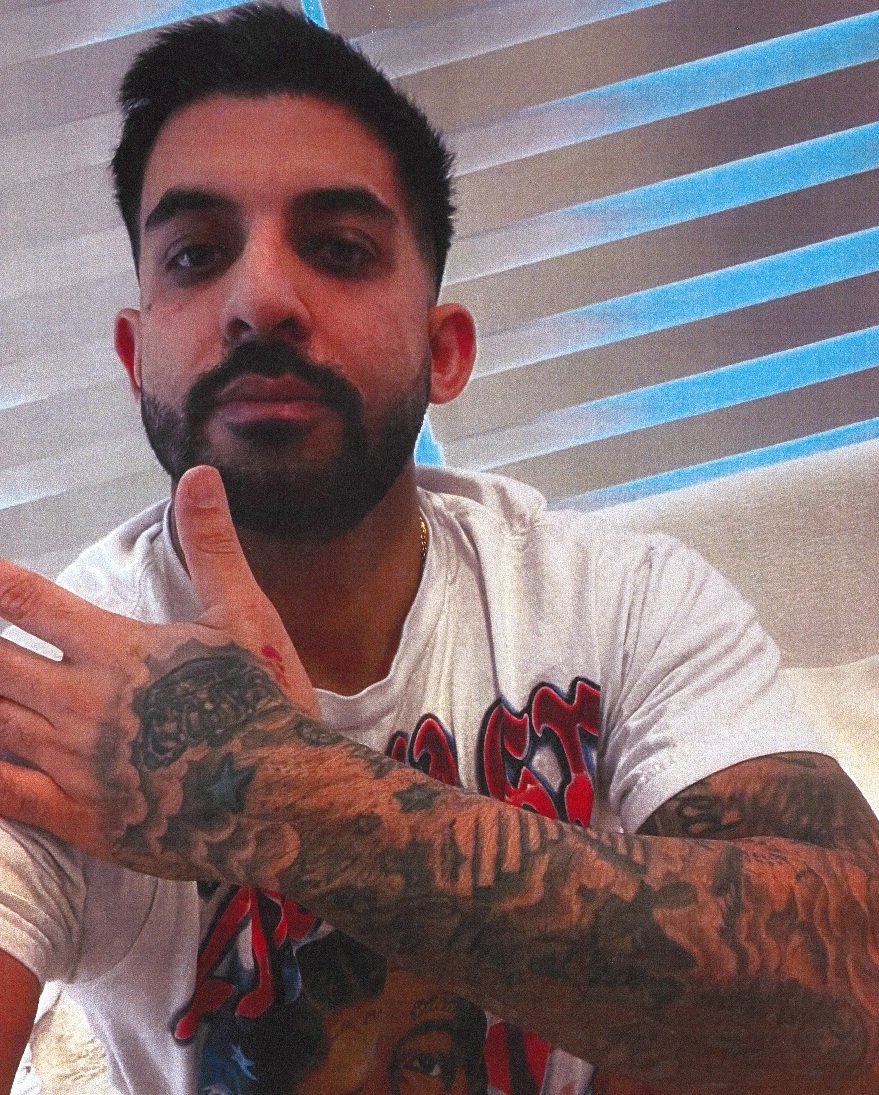
The tattoo on Gurtaj Sandher’s arm—a realistic eye with a clock/spiral containing Roman numerals—is a highly specific set of “identity markers.” While these elements are popular in general tattoo culture, their combination in a high-stakes criminal environment like the Sandher/Wedding network carries deep symbolic weight.

1. The “All-Seeing” Eye: Authority and Surveillance

In the context of international organized crime and Russian “Vory” traditions, eyes have a very literal meaning:
– “I See Everything”: Placed on the chest or arms, eyes signify that the wearer is an “Authority” who is always watching. It serves as a warning to subordinates and rivals that nothing escapes his notice.
– Watching Over the Brotherhood: It can also represent a “guardian” status, signifying that he is watching over his “brothers” or the organization’s interests.
2. The Clock with Roman Numerals: “Endless Time”
The clock face spiraling into the center of the eye is a classic symbol of “Doing Time” or the inevitability of fate.
– The Sentence: A clock without hands (or one spiraling into an abyss) traditionally represents a life sentence or the idea that “time has stopped” within the criminal lifestyle.
– Roman Numerals: Notice the specific use of “IIII” instead of “IV” for the number 4. This is a traditional clockmaker’s standard often used in high-end horology for symmetry, but in tattoos, it often represents a “Classic” or “Old World” commitment to the rules of the underworld.
– Memento Mori: The combination of the eye and the clock is a “Memento Mori” (Remember Death), signifying that the wearer is aware of their own mortality and the high stakes of their “crazy life” (Vida Loca).
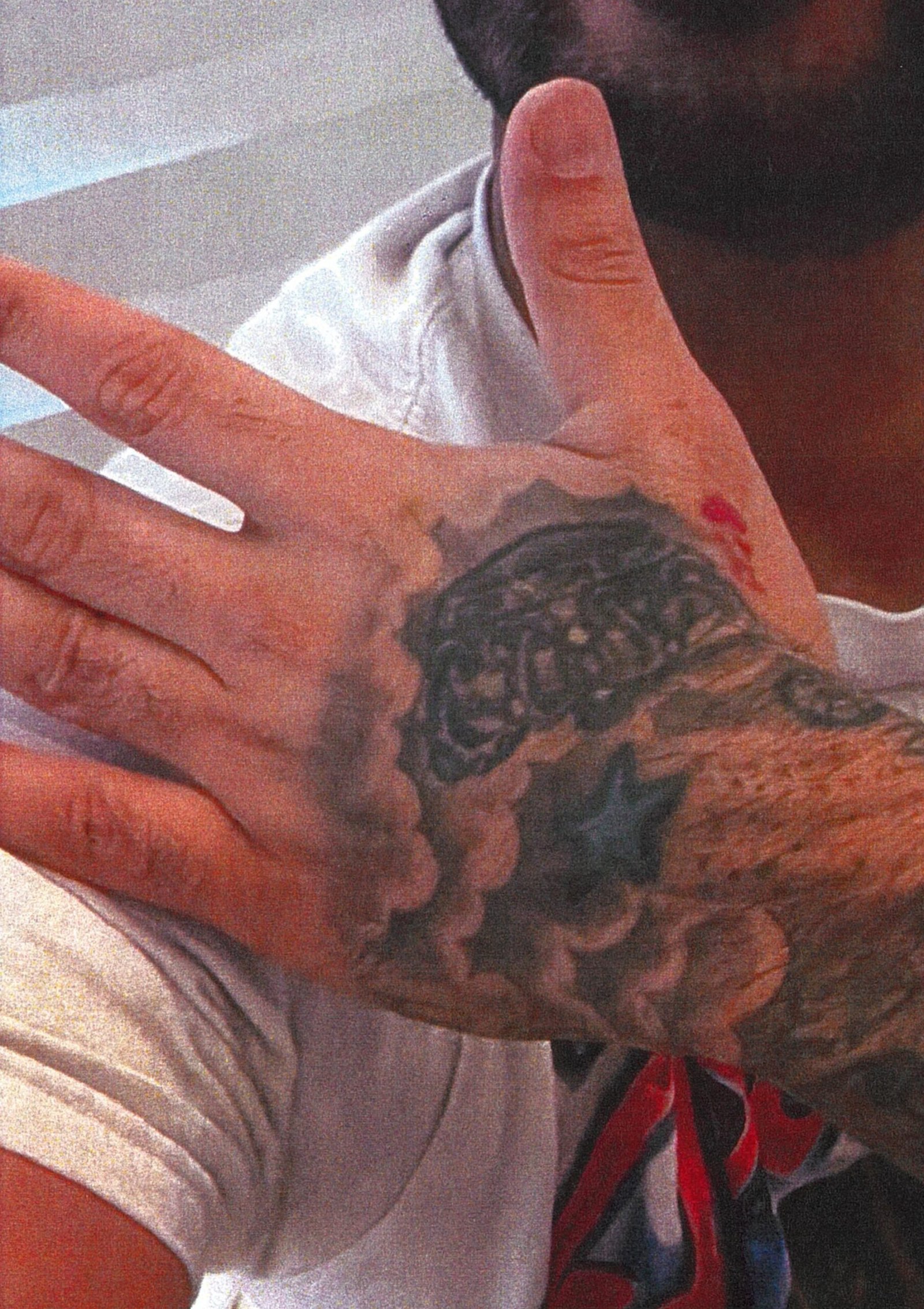
Crown Tattoo. Based on the forensic patterns for gang identification, here is the breakdown of why this specific tattoo is a high-level identifier:
The “Five-Point” Count – The number of points on a crown is the most critical metric for law enforcement.
– Latin Kings/Queens: A five-pointed crown is the primary symbol of the Latin Kings and Almighty Latin Queen Nation (ALQN).
– Philosophy of the Five: Each point represents a core tenet: Love, Respect, Sacrifice, Honor, and Obedience.
– People Nation Affiliate: The five points also denote affiliation with the People Nation umbrella, which uses the number five as its primary numerical identifier.
3. The “Spiral” Effect: The Descent
The way the clock numbers spiral into the pupil of the eye suggests a “Descent into the Life.” * In criminal forensics, this indicates someone who feels they are caught in a cycle or a “vortex” of the organization that is inescapable.
– It is a visual representation of Loyalty until Death, where the “eye” (his vision) and “time” (his life) are one and the same.
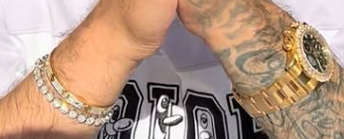
The hourglass tattoo on Gurtaj Sandher’s arm is a heavy status symbol that serves as a visual record of “lost time” and a commitment to the “Thieves’ World”. While common in general art, its specific placement and design in this context represent a long-term criminal career and a readiness for incarceration.
1. The “Doing Time” Mark
Within the Canadian and international prison systems, an hourglass or a clock with no hands is the universal code for “Hard Time”.
– The Long Sentence: It signifies that the wearer has served a significant portion of their life behind bars or acknowledges that their lifestyle will inevitably lead back to a cell.
– The “Sand” of Life: As the sand flows from the top chamber to the bottom, it represents the years being “wasted” in prison. For a high-level associate in the Wedding/Sandher organization, this is a badge of honor, proving they can “handle the heat” of a long sentence without breaking.

2. The Rosary and “Faith” Shield
Notice the rosary beads or pearl-like chain draped around the hourglass. This is a common element in Cartel and Mafia branding.
– Divine Protection: In Latin American and Southern European criminal cultures, the rosary is worn as a “spiritual shield” to protect the wearer from death or capture.
– The “Martyr” Complex: It suggests that the wearer believes their criminal actions are “forgiven” or sanctioned by a higher power, often signifying a “Death or Glory” mentality.
3. The “Death or Time” Choice
The proximity of the hourglass to other dark imagery (like skulls or religious symbols often found in this network) creates a “Dual Fate” message:
– The Choice: It communicates that the only two outcomes for his life are prison (the hourglass) or death (the cross/faith symbols).
The “Vida Loca” Lifestyle: This tattoo acts as a permanent reminder of the “Laugh Now, Cry Later” philosophy, where the “luxury life” is the top of the hourglass, and the “prison cell” is the inevitable bottom.
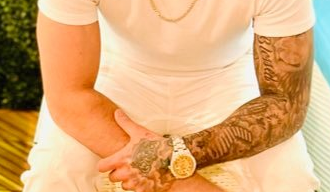
The tattoos on Prabtaj Sandher’s arm (specifically the Lion and the Money Rose) represent high-level organizational rank and a specific “hustler” philosophy within the underworld.
These specific visual markers are used to distinguish between “front-line” associates and “executive-level” logistical coordinators.
1. The Lion: The “Supreme Authority”

The lion is one of the most significant power symbols in organized crime, particularly within Indo-Canadian and European networks.
– The King of the Pride: In a criminal hierarchy, the lion denotes an “Alpha” or Leader status. It signifies that the wearer is not a follower but someone who commands a “pride” (a cell or crew).
– Fearlessness and Protection: It represents a vow to protect the family (the Sandhers) and the “King” (Wedding) at any cost. For a logistics coordinator, it signals that he is the “guardian” of the organization’s assets.
2. The Money Rose: “The Dirty Currency”
You likely see a rose where the petals are made of currency/banknotes. This is a highly specific “Findom” and laundering symbol.
– Dirty Money Running Constant: In the criminal underground, a Money Rose signifies that the wearer “constantly has dirty money running through their pockets”.
– The “Laundering” Flower: It represents the process of turning “thorny” (illegal/dangerous) money into something “beautiful” (legal/clean assets). This perfectly matches the role of a logistics coordinator who manages the cash flow for a $1-billion drug empire.
– The “Stage 18” Evolution: Traditionally, a rose can mean a criminal turned 18 in prison, but when it is a moneyrose, it signifies a transition into professional-tier financial crime.
3. The “Rose & Dagger” or “Rose & Barbed Wire” Variations
If the rose is intertwined with thorns or wire, it adds a layer of “Sacrifice and Struggle”.
– It tells the story of a man who has “blossomed” within a dangerous environment (the drug trade) and accepts the “thorns” (the violence and risk of prison) as part of the beauty of the lifestyle.
Leave a Reply