An attempt by Richmond company and land owner Montrose Properties to reopen Cowichan Tribes v. Canada was shot down as an “abuse of process for relitigation” by, drumroll, Barbara M. Young. Montrose Properties, the area’s largest landowner, tried to have the case reopened, arguing it was unfairly omitted from the original trial and that its fee simple land interests are directly inpacked by a declaration of Aboriginal title.
‘Justice’ Barbara M. Young isn’t interested in hearing from the parties directly negatively affected by her negligence as a judge.

—————————————————-
The Supreme Court of Canada has upheld a ruling that Aboriginal title cannot be declared over private land. The high court decision will have an impact on the Cowichan Tribes case. The refusal by Canada’s highest court to hear a First Nation’s appeal against a decision in New Brunswick establishes a precedent that First Nations can seek compensation for loss of traditional lands, but they can’t assert ownership.
See —– Justice Barbara M. Young – Bill C-31 hire
—————————————————-
The B.C. government is appealing the landmark ruling handed down by the conflicted Barbara M. Young. AG Niki Sharma said the B.C. government strongly disagrees with the decision. “British Columbia will be filing an appeal and seeking a stay to pause implementation until the appeal is resolved,”
“We respect the court’s role in our justice system, but given the significant legal issues raised in the recent decision in Cowichan Tribes v. AG Canada et al., we believe it must be reconsidered on appeal. This ruling could have significant unintended consequences for fee simple private property rights in B.C. that must be reconsidered by a higher court.”
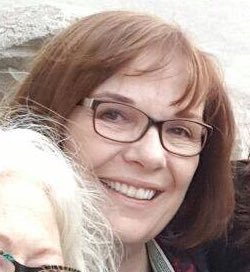
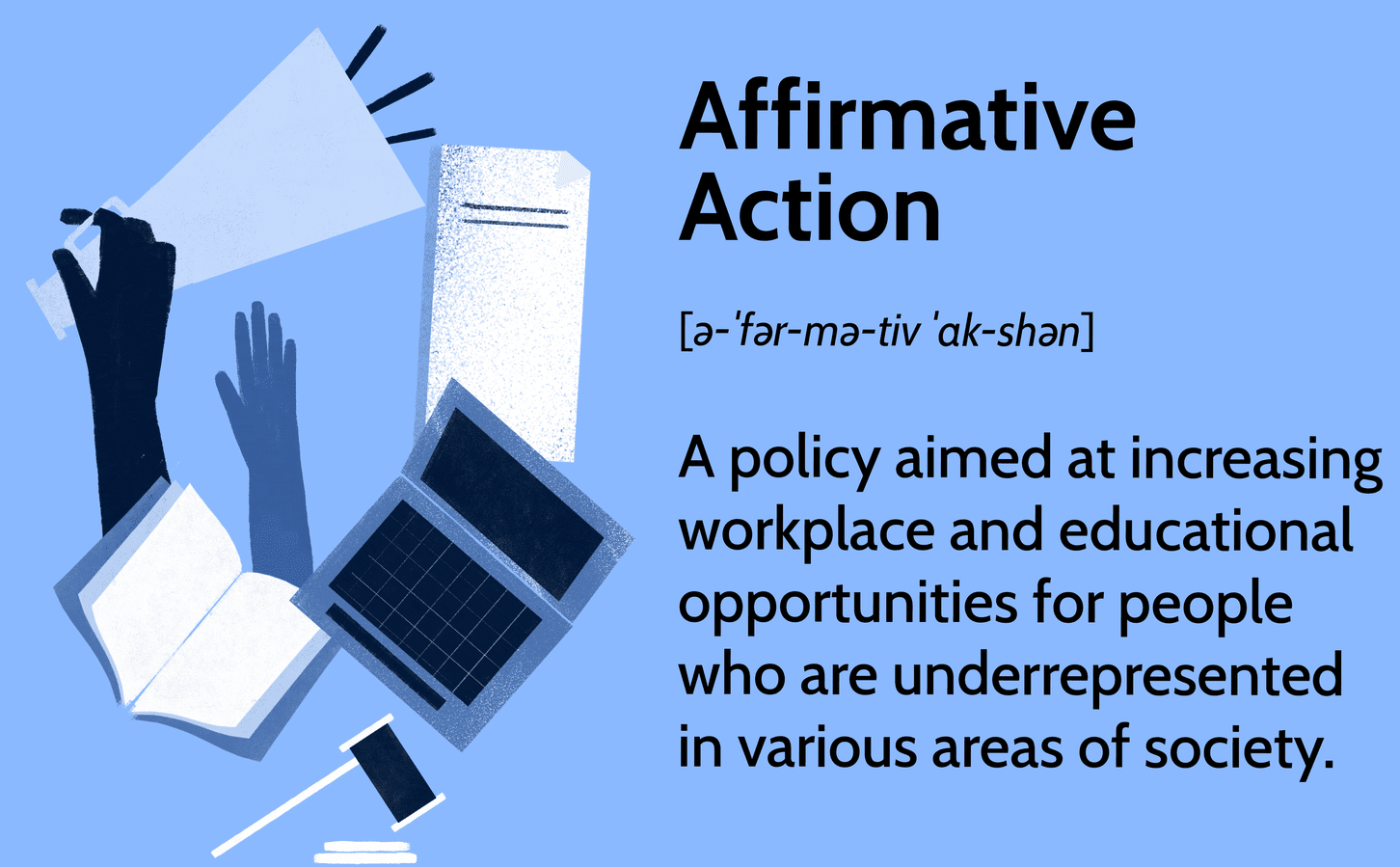
Barbara M. Young was unqualified from Day 1 and she must have known it. The inexperienced Justice sat through a massive trial exceeding 5 years that cost multi-millions. She was conflicted by the fact she is an affirmative action hire, placed on the high court in 2015 through Bill C-31.
 |
She ought to have recognized her limitations and stepped aside. She failed to do so. |
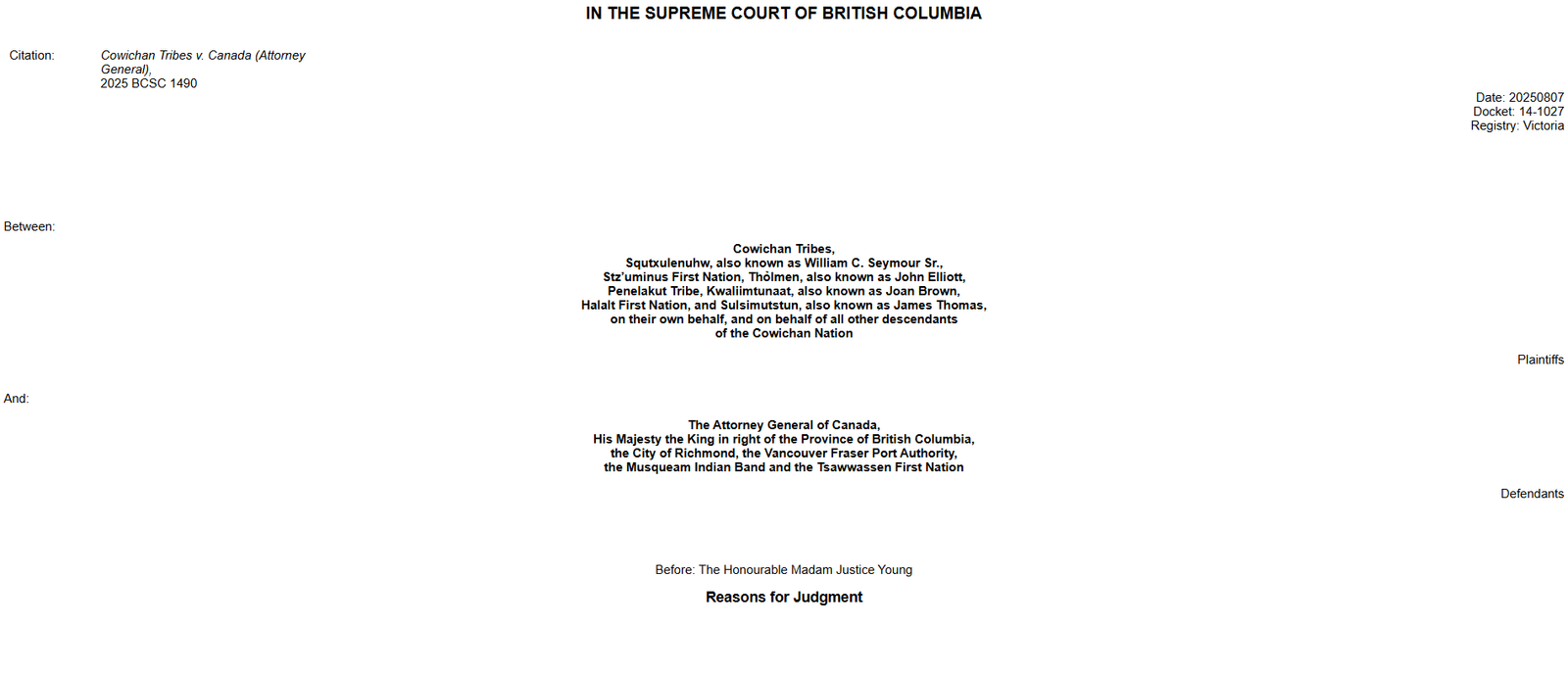
Our judge behind the longest trial in Canadian history is Justice Barbara M. Young. Her 863-page ruling resulted from a trial that stretched 513 days over five years, from 2019 to 2023. A momumental waste of scarce high court resources from a woman that likely shouldn’t be on the bench at all. This is what AI has to say about her huge judgment, one that defies a full reading in a single sitting.
Cowichan Tribes v. Canada (Attorney General), 2025 BCSC 1490, delivered on August 7, 2025:
https://www.bccourts.ca/jdb-txt/sc/25/14/2025BCSC1490.htm
Key Findings of the Court
1. Recognition of Aboriginal Title
The Supreme Court of British Columbia formally recognized that the Cowichan Nation (including Cowichan Tribes, Stz’uminus, Penelakut, Halalt First Nation, and their descendants) holds Aboriginal title to a portion of lands along the south arm of the Fraser River, including submerged riverbed areas. This title is constitutionally protected under section 35(1) of the Constitution Act, 1982.
2. Invalidity of Fee Simple Grants
The Court found that Crown-issued fee simple titles and grants—including those covering submerged lands and certain highway-related lands on Lulu Island—unjustifiably infringe Cowichan title and are therefore defective or invalid.
3. Crown’s Duty to Negotiate
Both the federal and provincial governments must now negotiate in good faith, consistent with the honour of the Crown, to reconcile existing fee simple interests (including those held by third parties like Richmond or involved in infrastructure projects) with the newly recognized Aboriginal title.
4. Recognition of Aboriginal Fishing Rights
The Court also affirmed that the Cowichan Nation possesses an Aboriginal right to fish in the south arm of the Fraser River for food, as protected under section 35(1).
Why This Ruling Matters
Land Title System Disrupted: The decision upset the traditional notion that registered fee simple titles are final—instead, Aboriginal title may override such interests when established.
Submerged Lands Included: This is a striking acknowledgment that Aboriginal title can extend to underwater or foreshore areas, which deviates from many normative assumptions about Crown ownership.
Setting a Precedent: This is one of the most significant rulings since Tsilhqot’in Nation v. British Columbia, particularly in how it handles submerged and private lands.

The ruling covers approximately 1,846 acres (about 750 hectares) on the southeast corner of Lulu Island, encompassing a former traditional village site and parts of submerged shoreline in the south arm of the Fraser River.
The court-embedded map reportedly overlaps with city land, federal property, port terminals, container depots, and industrial estates—including some occupied by Amazon—and includes 146 acres of submerged shoreline.
A community news outlet also referenced a map illustrating claims over the former Quw’utsun (Cowichan) village site.

Leave a Reply